
Introduction
Bringing a senior or adult rescue dog into your home is one of the most rewarding experiences a pet owner can have. However, older rescue dogs often carry invisible emotional baggage. Past trauma, neglect, frequent shelter transitions, or poor early socialization can manifest as severe distress when left alone. When you attempt to enclose them in a confined space, panic can set in quickly. Learning how to crate train an older rescue dog with separation fears requires a completely different approach than training a fresh, clean-slate puppy.
Many well-meaning owners assume that placing a rescue dog in a crate is the immediate solution for house-soiling or destructive chewing caused by anxiety. Unfortunately, forcing a fearful dog into a wire or plastic box can escalate their panic, leading to broken teeth, torn nails, or deep emotional trauma. The goal is not to trap your dog, but rather to shift their perception so they view the crate as their ultimate safe room—a calm sanctuary where the pressures of the outside world disappear.
With patience, behavioral modification, and a gradual step-by-step framework, you can help your anxious canine companion build confidence. Here is a compassionate, practical approach to help you crate train an older rescue dog with separation fears and phobias without causing unnecessary stress.
Understanding Separation Anxiety and Phobias in Senior Rescue Dogs
Before introducing any training equipment, you must understand what is happening inside your dog’s mind. Older rescue dogs thrive on predictability, and unexpected confinement can trigger a severe panic response rather than mild discomfort.
The Root Causes of Anxiety in Older Rescues
An adult or senior rescue dog has a history that you may never fully understand. They may have been abandoned, locked in small spaces for punishment, or left alone for days at a time. When an older dog experiences separation anxiety, their emotional brain overrides their physical sense of safety. The crate might feel less like a den and more like a trap. Phobias, such as fear of thunder, fireworks, or sudden loud noises, can amplify this distress tenfold if the dog feels trapped during an episode.
Distinguishing Fear from Bad Behavior
It is critical to realize that a dog acting out inside a crate is not being stubborn or spiteful. Behaviors like heavy panting, drooling, frantic barking, digging at the door, or attempting to chew through metal wire are physical manifestations of physiological panic. Recognizing that these behaviors stem from intense fear allows you to approach the process with empathy rather than frustration.

Setting Up the Environment for Success
Creating a positive association begins before you ever ask your dog to step inside the crate. The physical setup plays a massive role in reducing environmental triggers and helping your dog feel secure.
Choosing the Right Style and Size
Not all crates are created equal, especially for anxious dogs. Traditional wire crates can make some dogs feel exposed, while heavy plastic travel crates might feel too dark or claustrophobic. For a dog with severe panic, heavy-duty impact crates designed for anxious dogs are often safer and prevent physical injury. Ensure the crate is large enough for your dog to stand up, turn around completely, and lie down comfortably, but not so vast that it loses its cozy, den-like feel.
Strategic Crate Placement
Where you place the crate can make or break your training efforts. Avoid placing the crate in an isolated basement or a high-traffic, noisy hallway. Instead, choose a quiet corner of a family room where your dog can still feel included in the household dynamic. Keep the crate away from hot radiators, direct sunlight, or drafty doors.
Creating a Calm Safe Zone
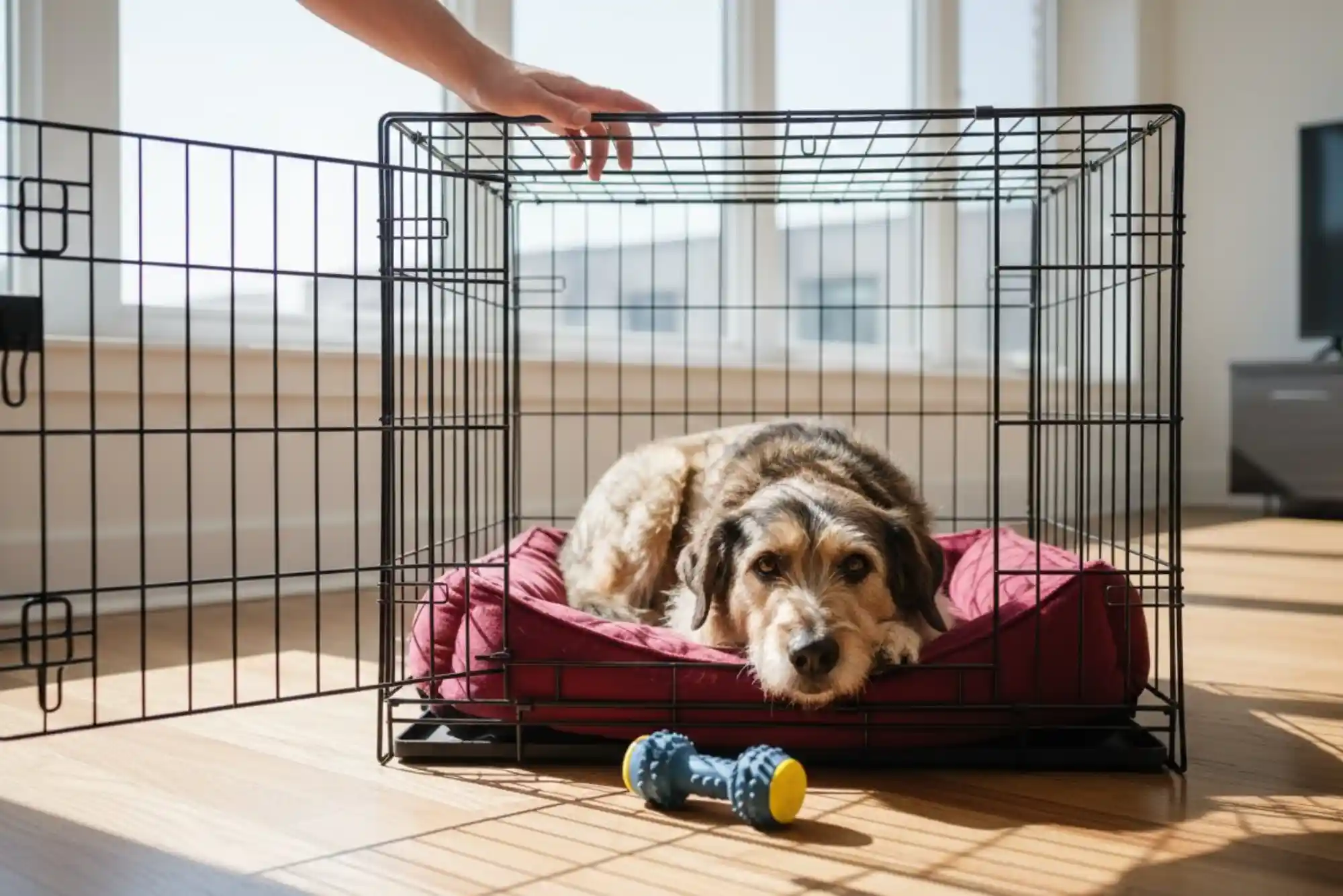
Transform the interior into a luxurious space. Place an orthopedic bed inside, especially if your rescue is a senior with aching joints. You can drape a breathable sheet over three sides of a wire crate to create a snug cave effect, leaving the front open. Consider using adaptil or synthetic pheromone diffusers near the crate, alongside soft classical music or white noise to drown out triggering external sounds.
Step-by-Step Guide to Crate Train an Older Rescue Dog with Separation Fears
Progress with an anxious older dog is measured in tiny increments. Never rush this process, and be prepared to move back a step if your dog shows any signs of distress.
Desensitizing the Presence of the Crate
Start by leaving the crate door securely tied open so it cannot accidentally slam shut and startle your dog. Make the crate a permanent, non-threatening piece of furniture. Toss high-value treats—like cooked chicken, freeze-dried liver, or small cheese cubes—near the entrance. Allow your dog to sniff around and eat the treats at their own pace without any pressure to enter. Do not force them, push them, or close the door.
Encouraging Voluntary Exploration
Once your dog comfortably approaches the exterior, begin dropping treats just inside the doorway. Slowly toss treats further back so your dog must step inside with two paws, and eventually all four paws, to retrieve them. Praise them softly when they enter, but let them back out immediately. The key is teaching them that they have complete control over their movements and are never trapped.
Feeding Meals Inside the Crate
Food builds powerful positive emotional associations. Start placing your dog’s regular meal bowl just outside the open crate door. Over several days, move the bowl incrementally further inside until your dog happily eats their entire meal fully inside the crate with the door still wide open. If your dog hesitates at any point, move the bowl back outward to a spot where they feel completely comfortable.
Introducing the Door Movement
Once your dog eagerly runs into the crate for food, you can begin introducing door movement. While your dog is eating a high-value treat or working on a stuffed food puzzle inside, gently swing the crate door shut for just two seconds, then open it before they finish eating. Gradually increase this duration from two seconds to ten seconds, then thirty seconds, always rewarding calm behavior. If your dog whines or paws, you have progressed too quickly.
Building Duration and Distance
When your dog can relax inside with the door closed for a few minutes while you sit right next to them, begin adding physical distance. Close the door, step back two paces, sit down for thirty seconds, then return and open the door without making a big fuss. Slowly extend this duration and begin stepping briefly out of the room. Always keep departures low-key to prevent triggering their separation fears.
Managing Separation Phobias and Noise Triggers
Crate training an older rescue dog with separation fears involves managing their internal emotional state during real-life stress events like thunderstorms or unexpected departures.
Counter-Conditioning High-Stress Times
Dogs are experts at reading human departure cues. Picking up your keys, putting on a coat, or sliding on shoes can send an anxious dog into a panic long before you walk out the door. Desensitize these cues by performing them randomly throughout the day without leaving. Pick up your keys, sit on the couch for two minutes, and put them down. Pair these actions with a delicious treat inside the crate to reframe departure routines into positive events.
Addressing Noise Phobias
If your rescue dog suffers from noise phobias alongside separation anxiety, the crate can serve as a sound-dampening sanctuary. Covering the crate with heavy blankets (ensuring proper ventilation) and running a loud box fan or white noise machine nearby can muffle triggering sounds like thunder or fireworks. Introduce these soothing elements during calm moments so your dog associates them with relaxation.
Common Pitfalls to Avoid During Training
When working through complex emotional issues with an older dog, avoid these common mistakes that can set your progress back by weeks.
Never Use the Crate for Punishment
The crate must remain a purely positive location. Never send your dog to their crate in anger, shout at them while they are inside, or use it as a time-out space for unwanted behaviors. If a dog views their crate as a place of confinement and human frustration, their anxiety will skyrocket.
Avoid Letting Them “Cry It Out”
Traditional advice often suggests letting a crying dog settle themselves. While this might work for a mildly fussy puppy, it is dangerous for an older rescue dog experiencing genuine separation panic. Letting a panicked dog cry it out can lead to learned helplessness, severe self-harm, or heightened distress. If your dog shows signs of panic, wait for a split-second pause in their distress, open the door calmly, and step back to an easier training stage.
Skipping Mental and Physical Exercise
Anxious energy needs a healthy outlet. Ensure your older rescue dog receives appropriate physical exercise tailored to their age and mobility, along with plenty of mental enrichment. Sniffing walks, lick mats, and puzzle toys help burn off nervous energy and promote the release of calming endorphins, making crate time much smoother.
FAQs
How long does it take to crate train an older rescue dog with separation anxiety?
The timeline varies significantly depending on the severity of your dog’s trauma and anxiety. Some older rescue dogs adjust within three to four weeks of consistent, gentle training, while others may take several months. Patience, small incremental steps, and consistency are essential for long-term success.
What if my rescue dog completely panics inside the crate?
If your dog displays extreme panic—such as biting the bars, heavy drooling, self-injury, or frantic digging—stop using the crate immediately. Forcing the issue will exacerbate their phobia. Consult a certified professional dog trainer or a veterinary behaviorist to work on foundational anxiety management before reintroducing the crate.
Should I leave my anxious dog in a crate while I go to work all day?
No, you should not leave a dog with severe separation anxiety enclosed in a crate for long work shifts, especially early in the training process. Until your dog is completely comfortable and relaxed in the crate for extended periods, consider using doggy daycare, hiring a pet sitter, or setting up a safe, baby-gated room.
Can veterinarian-prescribed anxiety medication help with crate training?
Yes. For dogs dealing with severe separation phobias, short-term or long-term anti-anxiety medications prescribed by a veterinarian can help lower their baseline stress. This allows their brain to achieve a calm state where positive learning and counter-conditioning can actually take effect.
Learning how to crate train an older rescue dog with separation fears and phobias requires a delicate balance of patience, empathy, and structured behavioral modification. By moving at your dog’s pace, respecting their emotional boundaries, and transforming the crate into an inviting safe haven, you can give your rescue companion the gift of true security. Remember that every small victory counts toward building their confidence. Take your time, stay consistent, and celebrate each step forward on your journey together. If you are struggling with severe anxiety responses, consider reaching out to a professional dog trainer or veterinary behaviorist today to craft a customized training plan for your dog.