
Introduction
Introducing two adult dogs requires patience, preparation, and careful observation. Adult dogs may have established habits, boundaries, and previous experiences that affect how they respond to another dog. Therefore, a rushed meeting can create unnecessary tension.
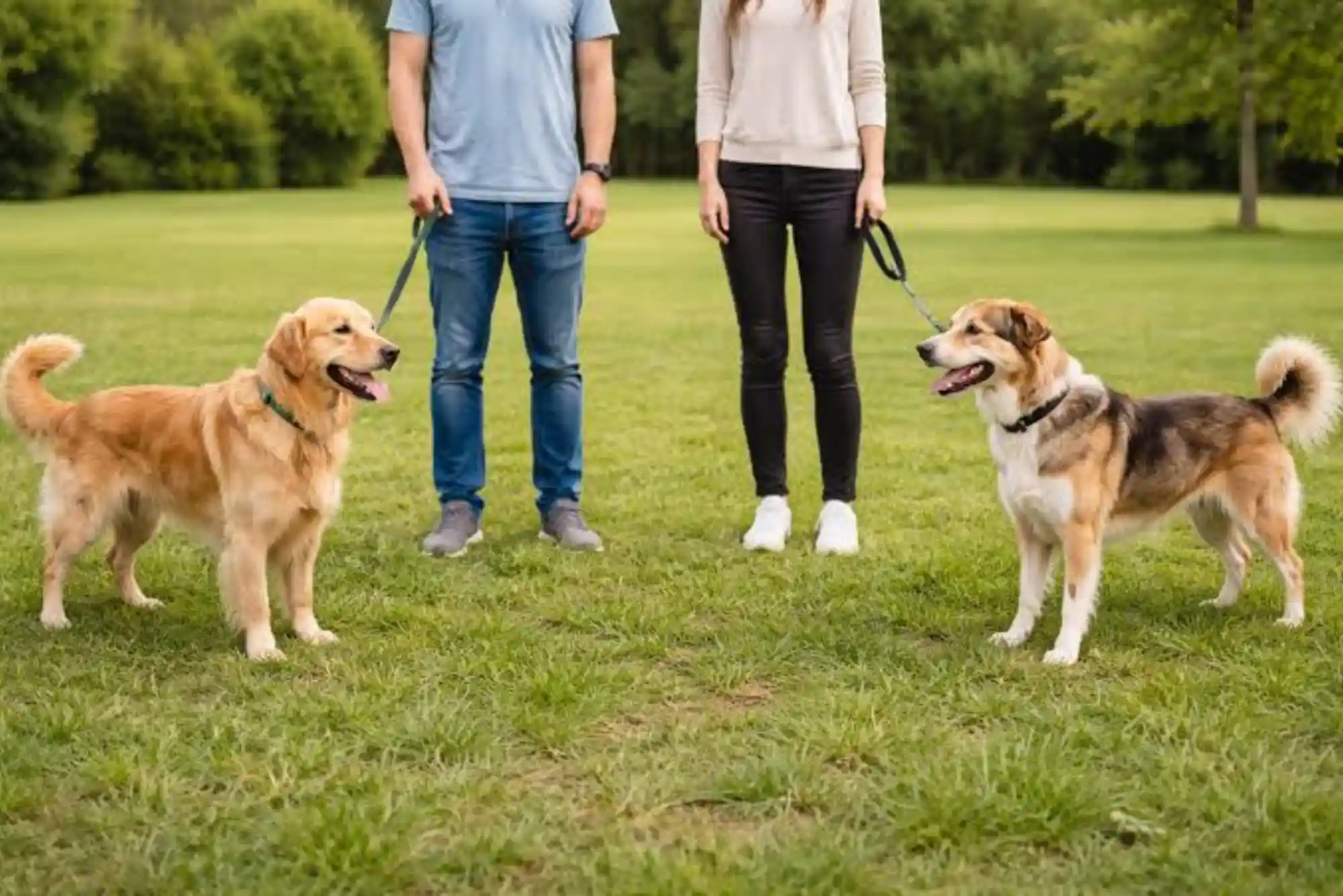
If you are wondering how to introduce two adult dogs on neutral territory without fighting, start away from either dog’s home. Neutral territory reduces territorial pressure and gives both dogs more space to move naturally. A controlled introduction also allows you to notice stress signals before they become serious.
The goal is not to make the dogs become friends immediately. Instead, the first meeting should create a calm and positive experience. With the right approach, many adult dogs can learn to coexist comfortably.
Why Neutral Territory Matters
Dogs can behave differently when another dog enters their home or yard. Familiar areas may contain food, toys, sleeping spaces, people, or other resources. These resources can increase guarding or defensive behavior.
Neutral territory removes many of these triggers. A quiet park, open walking path, or unfamiliar outdoor area can work well. However, avoid crowded dog parks during the first meeting.
The location should provide enough space for both handlers to control movement. It should also have minimal distractions and escape routes. A calm environment makes communication easier for everyone.

When learning how to introduce two adult dogs on neutral territory without fighting, remember that distance is your friend. Dogs do not need to meet nose-to-nose immediately.
Prepare Before the First Meeting
Successful introductions often begin before the dogs see each other. Both handlers should understand basic canine body language. They should also agree on a simple meeting plan.
Use secure, comfortable leashes and properly fitted collars or harnesses. Avoid retractable leashes because they can make distance difficult to control.
Each handler should bring small, highly valued treats. Treats can help create positive associations without forcing interaction. However, food should not be used if either dog becomes possessive around treats.
It is also useful to exercise each dog lightly before the meeting. A relaxed dog may find the experience easier to manage. Avoid exhausting either dog because excessive fatigue can also increase stress.
Start With Distance
The first stage should involve seeing each other from a comfortable distance. Do not immediately walk the dogs directly toward one another.
Begin with both handlers walking in the same general direction. Keep enough distance between the dogs that neither appears overwhelmed.
A dog may look at the other dog and then continue walking. That is often a useful starting point. Calmly reward relaxed behavior when appropriate.
Gradually reduce the distance if both dogs remain comfortable. There is no fixed amount of time required. Some dogs may progress within minutes, while others need several sessions.
When considering how to introduce two adult dogs on neutral territory without fighting, always prioritize emotional comfort over speed.
Watch the Dogs’ Body Language
Understanding canine body language is one of the most important parts of an introduction. Dogs communicate stress before they necessarily bark, growl, or snap.
A relaxed dog may have a loose body and natural movement. The mouth may remain relaxed, and the dog may casually investigate the surroundings.
Stress can appear in subtler ways. A dog might freeze, turn away, lick the lips, yawn repeatedly, hide behind the handler, or suddenly become very stiff.
Hard staring deserves particular attention. A fixed gaze combined with a rigid body can indicate increasing tension.
Growling should not automatically be punished. Growling is communication. It can tell you that a dog needs more distance.
If either dog becomes uncomfortable, calmly increase the distance. Give both animals time to settle before continuing.
Walk Parallel Instead of Head-On
A parallel walk is one of the most useful techniques for introducing adult dogs. Both dogs move in the same direction while remaining separated.
Walking together reduces the pressure of direct face-to-face interaction. It also gives the dogs an opportunity to investigate scents and surroundings.
Keep the handlers relaxed and avoid pulling constantly on the leash. Excessive leash tension can make dogs feel restricted.
As the dogs become calmer, gradually reduce the distance. Continue walking rather than stopping immediately for a greeting.
This approach allows the dogs to gather information naturally. It also gives handlers more opportunities to notice changes in body language.
Allow a Short Greeting
Once both dogs appear relaxed, allow a brief greeting. Keep the leashes loose when safely possible.
Avoid forcing the dogs to stand directly together. Let them approach at their own pace.
A short sniff followed by movement away can be a successful interaction. The dogs do not need to spend several minutes greeting each other.
If the interaction remains relaxed, continue the walk. You can allow another brief greeting later.
This gradual process is central to how to introduce two adult dogs on neutral territory without fighting. Short positive interactions are usually easier to manage than one prolonged encounter.
Know When to Increase Distance
Not every meeting will progress smoothly. Some dogs need additional space before they can remain calm around another dog.
Signs that you should increase distance include stiff posture, intense staring, raised hackles, repeated lunging, barking, snapping, or attempts to escape.
Do not wait for a fight to happen. Early intervention is safer and more effective.
Move the dogs apart without creating additional excitement. Walk in opposite directions if necessary.
After both dogs relax, you can reassess the situation. Sometimes the best decision is to end the session and try again another day.
Avoid Common Introduction Mistakes
One common mistake is forcing dogs together because owners believe they need to “get used to each other.” Forced interaction can increase fear and defensive behavior.
Another mistake is allowing an uncontrolled greeting at the beginning. Even friendly dogs can react badly when approached too quickly.
Owners should also avoid tightening the leash whenever the dogs look at each other. Constant tension can contribute to frustration.
Crowded dog parks are another poor choice for a first meeting. Multiple unfamiliar dogs create additional distractions and unpredictable interactions.
Finally, do not punish warning signals. A dog that growls is communicating discomfort. Removing the warning without addressing the underlying stress can make future situations harder to read.
Moving the Dogs Toward the Home
Once the dogs have interacted calmly outside, you may eventually need to bring them home. This stage requires additional care because home environments can trigger territorial behavior.
Continue walking the dogs together before entering the property. If possible, allow them to enter after they have already had calm outdoor interaction.
Remove high-value toys, food bowls, and other resources before the dogs enter shared spaces. This reduces opportunities for conflict.
Supervise the dogs closely during their early time together. Do not assume that a successful outdoor meeting guarantees immediate harmony indoors.
Give each dog access to separate resting areas. They should be able to move away from each other when they need space.
What If the Dogs Fight?
If a fight occurs, prioritize safety. Do not place your hands between fighting dogs or grab collars near their heads.
After separation, give both dogs enough space to recover. Do not immediately force another interaction.
Even a brief fight can change how the dogs respond to one another. If aggression occurs, professional guidance from a qualified veterinary behaviorist or experienced reward-based behavior professional may be appropriate.
A professional can identify triggers and develop a controlled behavior plan. This is especially important when either dog has a history of serious aggression.
How Long Should Dog Introductions Take?
There is no universal timeline for introducing adult dogs. Some dogs become comfortable after several meetings, while others need weeks of gradual exposure.
The important measure is behavioral comfort rather than elapsed time.
A successful introduction may involve several short sessions. During each session, the dogs should experience calm proximity without being pushed beyond their limits.
Progress can include walking calmly together, ignoring each other, relaxing nearby, and responding normally to their handlers.
Friendship is not required. Peaceful coexistence is a valuable outcome.
Can Two Adult Dogs Eventually Live Together?
Yes, many adult dogs can learn to live together successfully. However, compatibility depends on individual temperament, history, social skills, environment, and management.
Some dogs may become close companions. Others may simply learn to share space without conflict.
That distinction is important. A successful relationship does not require constant playing or sleeping together.
Owners should continue supervising interactions during the adjustment period. They should also maintain separate resources when needed.
Consistent routines can help both dogs understand what to expect. Predictability often makes household transitions easier.
Frequently Asked Questions
How should you introduce two adult dogs for the first time?
Start on neutral territory with plenty of space. Walk the dogs parallel to each other before allowing a brief greeting. Watch body language carefully and increase distance if either dog becomes uncomfortable.
Should dogs meet on leash or off leash?
For an initial meeting, controlled leashes are generally safer. They allow handlers to manage distance and redirect the dogs if necessary. Avoid forcing close interaction through leash pressure.
How long should two dogs sniff each other?
There is no exact ideal duration. A brief, relaxed sniff can be enough for an initial greeting. Allow the dogs to move away rather than forcing prolonged contact.
What should I do if one dog growls at the other?
Calmly create more distance. Do not punish the growl because it communicates discomfort. Once the dog relaxes, reassess whether the interaction can continue safely.
Can two adult dogs become friends?
Yes, adult dogs can develop positive relationships. However, friendship is not guaranteed or necessary. Calm coexistence is an equally successful outcome.
How do you introduce an aggressive dog to another dog?
Aggressive or highly reactive dogs require additional caution. Avoid direct introductions without professional guidance. A qualified behavior professional can create a gradual plan based on each dog’s triggers and responses.
Conclusion
Learning how to introduce two adult dogs on neutral territory without fighting is primarily about controlling pressure and allowing both dogs to communicate naturally. Neutral territory, parallel walking, appropriate distance, and careful body-language observation can make the process safer.